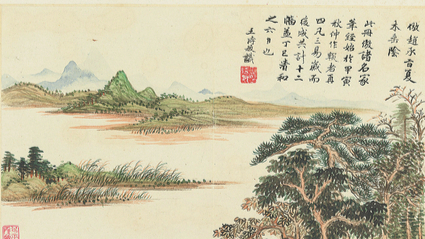
Wang Shimin
Introduction
Wang Shimin (1592-1680) was a revered figure in the realm of Chinese literati painting during the early Qing Dynasty. As a leading figure among the "Four Wangs", a collective term for four influential landscape painters of this period, Wang Shimin contributed significantly to the art form known as Chinese landscape painting, or "shan shui". Renowned for his rigorous technique and elegant style, Wang Shimin's works embody the ethos of the literati painters, who combined painting, literature, and calligraphy as a means of self-cultivation. His works and teachings have left an enduring legacy in Chinese art, influencing generations of artists and cementing his place as a pivotal figure in the history of Chinese art.
Early Life
Wang Shimin was born in 1592 into a family of scholar-officials in Taicang, Jiangsu province, a region noted for its cultural richness. This familial background provided him with a solid foundation in classical Chinese culture and education, which was essential for the development of his artistic pursuits. The environment in which he was raised was characterized by an appreciation for the arts and literature, which significantly shaped his future path as a painter. From an early age, Wang was introduced to the intellectual and artistic circles of his time, fostering connections that would later influence his career as a painter.
Career
Wang Shimin's career as a painter is marked by a deep engagement with the traditions of earlier Chinese masters. He is known for his dedication to imitating the styles of previous landscape painters, which was a common practice among literati artists who believed that true innovation arose from a deep understanding of historical precedents. Wang Shimin was particularly influenced by the works of Huang Gongwang and Dong Qichang, whose styles he diligently studied and incorporated into his own work.
Artistic Style and Techniques
Wang Shimin's artistic style is characterized by meticulous brushwork and a refined elegance that reflects his scholarly background. His paintings often depict serene landscapes that embody the essence of Chinese natural beauty. Wang Shimin employed a variety of brush techniques to capture the intricate textures and subtle atmospheres of the natural world. His style is noted for its emphasis on simplicity and grace, aligning with the literati ideal of art as a means of personal expression and moral cultivation.
Notable Works
Among Wang Shimin's most acclaimed works is Autumn Mountains and White Clouds, which exemplifies his mastery of landscape painting. This piece, like many of his works, showcases his ability to convey a sense of tranquility and depth through the use of soft, flowing brushstrokes and harmonious compositions. Wang Shimin's works often serve as visual essays on the history of Chinese painting, reflecting his deep respect for traditional artistic forms while also showcasing his unique interpretative style.
Influence and Recognition
Wang Shimin's contributions to Chinese art have been recognized both within China and internationally. His works are featured in prominent museum collections, such as the Palace Museum in Beijing and the Metropolitan Museum of Art in New York, where they continue to be studied and admired by art historians and enthusiasts alike. The enduring appeal of his paintings lies in their ability to convey the profound beauty and complexity of the natural world through the lens of the literati tradition. Wang Shimin's legacy is a testament to the enduring power of art to transcend cultural and temporal boundaries, offering insights into the values and aesthetics of a bygone era.








